
I went through every official OpenAI source on ChatGPT advertising — the policy pages, the help center, the market expansion announcements, the advertiser API docs. Then through every independent test with real spend I could find, where a named agency published what it paid and what it got back. The reason is simple. In six months the internet filled up with numbers that have no source: "51% of answers carry ads", "Newegg 7x ROAS". Go looking for where those came from and there is nothing there.
This guide separates the verified from the invented. Everything stated here as fact comes either from an official OpenAI source or from a named agency that published its budget and its result. Where something is only a vendor claim with no audit, it says so. Where something does not exist despite being widely described as if it does, it says that too. Everything is current as of 1 September 2026, and I update the guide as the product changes — which it does, fast.
TL;DR
ChatGPT Ads are sponsored cards that appear below a finished answer, seen only by logged-in Free and Go users. You don't buy keywords — you describe the conversational context you want to show up in. Self-serve accounts are available in 47 countries. Real-world CTR from independent tests lands at 0.65-1.3%, and real CPC runs $1.72 to $12 against OpenAI's recommended $3-5 opening bid.
47
countries with self-serve accounts
$1B
run rate in under 200 days
0.65-1.3%
CTR in independent tests
🔄 Living guide — change history
This guide is updated as OpenAI changes the product. What's new:
- September 2026: First version: formats and placement, the two separate rollout lists (where ads serve vs where you can buy), buying models and the auction, targeting without keywords, no personalization in the EEA, measurement and the click gap, categories banned outside the US, independent benchmarks with denominators. Added since: hands-on account experience (access and the MCC glitch), who the channel still doesn't fit, budget for a test, quality measurement, the OpenAI Ads name, and a step-by-step summary.
Quick answer
What are ChatGPT Ads?
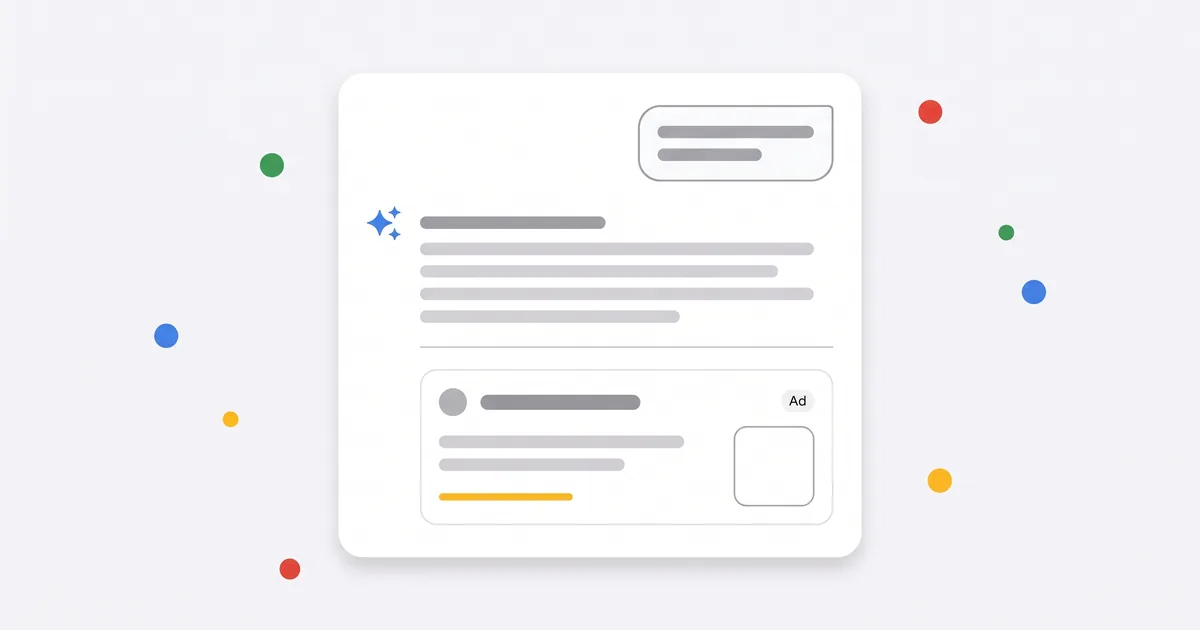
ChatGPT Ads are sponsored cards that OpenAI shows below the end of an answer in ChatGPT, clearly labeled and visually separated from the answer itself. Only logged-in users on the Free and Go plans see them. Advertisers don't pick keywords — they describe the conversational context they want to appear in, and the system decides whether the ad is relevant to the current topic. The ad never changes the answer. OpenAI's own name for the product is OpenAI Ads, run through ads.openai.com; in search queries and everyday conversation, this guide included, people say ChatGPT Ads. Same thing.
What ChatGPT Ads are and where they appear
The ad appears in exactly one place: below the end of the answer. Not mid-answer, not in a sidebar, not as a banner somewhere in the interface. The user asks a question, gets a full answer, and only underneath it sees one or more clearly labeled ad units. That is the entire placement surface.
That single sentence explains almost everything that will surprise you in the numbers further down. In search, the user sees the ad before getting an answer, while the question is still open. In ChatGPT they see it after the answer, when the question is already closed. Psychologically that is a completely different moment. The low CTR you will see below isn't a defect in the format — it is a consequence of where the ad sits.
The formats that actually exist:
- Standard card with advertiser name, logo, headline, body copy, image, and a link to the site
- Product carousel assembled automatically from a merchant product feed based on conversation signals; in beta since early August 2026
- Dynamic CTA — Shop Now, Book Now, Sign Up, Learn More — chosen automatically by OpenAI rather than by you
- "Ask ChatGPT" on the ad itself, letting the user pull the ad back into the conversation and ask about it; the advertiser has no influence over what ChatGPT then says
Who actually sees the ads:
- Only logged-in users on the Free and Go plans. Plus, Pro, Business, Enterprise and Edu are ad-free.
- No ads for users under 18, none in Temporary Chats, none in the Atlas browser.
- A Free user can opt out of ads in settings, in exchange for a lower message limit.
What does NOT exist, despite what you'll read
There is no sidebar placement. There is no separate "search mode" ad surface. There is no display network across partner sites. Conversational and interactive formats, where the ad would be part of the dialogue, have been announced as intent but have not shipped. If an article explains how to set up a conversational ChatGPT ad, it is describing something you cannot buy.
Where they are available: two different lists
This is the single most common reporting error about ChatGPT Ads, and it is worth understanding before anything else. There are two separate country lists, and almost everyone collapses them into one.
List A
Where ads are SERVED to users
41 markets, per OpenAI's 31 August 2026 announcement. This is a reach question: will your ad have anyone to show to in that country.
List B
Where a business can OPEN an account
47 countries, per OpenAI's official help center. This is an access question: is your business allowed to become an advertiser at all.
A country can sit on one list and not the other. When you read "ChatGPT Ads are now available in X countries", the first question is which of these two things is being claimed. For a real decision you need both: an entity in a List B country so you can buy, and an audience in List A countries so you have someone to sell to.
How the rollout went:
| Wave | Markets | Date |
|---|---|---|
| Pilot | United States | 9 February 2026 |
| 2 | Canada, Australia, New Zealand | announced 26 March 2026 |
| 3 | UK, Mexico, Brazil, Japan, South Korea | announced 7 May, confirmed live 11 August 2026 |
| 4 | 31 European markets (EU 27 plus Iceland, Liechtenstein, Norway, Switzerland) | announced 18 August, live 24 August 2026 |
| 5 | India | 29 August 2026 |
| 6 | Self-serve accounts: India, Europe, Middle East, South Africa | 31 August 2026 |
There has been no single global launch, and OpenAI itself says it is "still early". Serving ads to users and opening self-serve buying arrive separately, often weeks apart, so do not trust an article that gives one date per market for both.
If your market is not on either list, you can start creating an account and leave your details to be notified, but that gives you no earlier access. There is no waitlist in the sense of queue priority. The clean paths are a genuine legal entity that actually operates in a supported market, or running through a client's entity that already does.
How to buy them: account, models, auction
There are five routes to the inventory, and for most businesses only the first one matters.
- Self-serve Ads Manager at ads.openai.com, in beta. Open in the US since 5 May 2026, and for India, Europe, the Middle East and South Africa since 31 August 2026.
- OpenAI Ads Solutions, the managed service for larger advertisers.
- Agency partners: Dentsu, Omnicom, Publicis, WPP.
- Over 50 tech and measurement partners, including Adobe, Criteo, Kargo, Pacvue and StackAdapt.
- Advertiser API for teams building their own automation.
Billing models:
- CPM for reach, available since February 2026.
- CPC for clicks, since 5 May 2026.
- oCPC, where you pay per click but the system optimizes toward a conversion. A bid cap is mandatory, the objective and conversion event are locked at creation, and tracking has to be live before the campaign starts. OpenAI says CPC with outcome bidding now carries the majority of campaigns.
The auction is relevance-weighted second-price. In plain terms: the highest bid doesn't win, the best combination of bid and relevance to the current conversation does, and you pay based on the runner-up. Max bid sits at ad group level. If that sounds familiar from Google Ads, it is the same principle — except here you get no Quality Score diagnostics telling you where you are losing.
The minimum spend history
In February 2026 entry required a commitment of $200,000-250,000. In April it dropped to $50,000, and on 5 May it was removed entirely. There is no entry threshold today, but there are per-market campaign minimums: $25 in the US, £15 in the UK, CA$25 and A$25, ¥2,500 in Japan, ₹725 in India. Euro amounts do not appear in any official source — if you read a specific euro figure somewhere, someone made it up.
Onboarding runs in order: business details, identity verification, account review, then campaign, ad group, creative and policy review. Assume review is not instant and do not plan a same-day launch.
Recommended bid vs what people actually pay
OpenAI recommends an opening CPC of $3-5. In independent tests with published spend, realized CPC ranged from $1.72 to $12 depending on vertical. Symphonic reported in August that a $3 bid produced zero impressions, and that it took roughly a $12 max bid before the campaign served at all. Treat the recommended range as a floor for uncontested topics, not as a planning number.
How to advertise on ChatGPT, step by step
- Check your category and market first - not every business is eligible everywhere. See who is allowed to advertise.
- Open an account at ads.openai.com, or through an agency partner, and get through identity verification and account review.
- Set up measurement before you touch a campaign - pixel, Conversions API, a UTM scheme. See measurement and the click gap.
- Write context hints instead of keywords - describe the conversation you want to appear in. See targeting without keywords.
- Launch with a learning budget and a fixed review window rather than a target ROAS. See how I run a pilot.
From my accounts
On the account I run, the client opened it and gave me access. There is a known glitch right now: if the client opens the account and grants access on your email, it can be hard to open your own MCC-style account under that same email afterwards. It gets sorted case by case - some stay stuck, some resolve quickly - and it depends on which country the account is being opened for. Practical takeaway: agree upfront whose email opens the account and who ends up managing it, before you open anything.
Targeting without keywords
This is where most people coming from Google Ads make their first conceptual mistake. There are no keywords in ChatGPT. There are context hints: a free-text description of the topics and situations you want to appear in, set at ad group level. Not exact match, not phrase match, and no guarantee of delivery. It is a signal to the system, not a rule.
What you can control:
- Context hints at ad group level
- Geo: country everywhere, plus state, DMA or ZIP in the US
- Platform: iOS, Android, web
- Custom audiences: uploaded emails or phone numbers as SHA-256 hashes, up to 512 MB and 5 million identifiers, with a minimum of 25,000 matched users before a list is usable; available as inclusion, exclusion or bid multiplier
What does not exist:
- Keyword lists and match types
- Demographics and interests
- Site-visitor retargeting
- Query-level reporting. You cannot see which prompt triggered which ad. For me this is the biggest practical gap: there is no equivalent of a search terms report, which means there is no weekly cleanup loop of the kind I run on every Search account.
The European specificity almost nobody explains
In the EEA and Switzerland, personalized ads are not initially available. Ad selection uses only the current conversation, coarse location and language. No memory, no past conversations, no ad interaction history. The practical consequence: in Europe there is no audience layer to hide a weak message behind. Context hints and creative carry the entire result. If the offer is vague, nothing in the EEA setup will rescue it.
On privacy, the advertiser never receives conversations, history, memories, name, email, precise location or IP address. You get aggregated performance data. Ads-related data is retained for 30 days after deletion. ChatGPT was designated a Very Large Online Search Engine in the EU on 31 August 2026, so by the end of December 2026 it must meet DSA obligations, including a public ad repository listing ad content, advertiser, serving period and targeting parameters — effectively an ad library for ChatGPT, with a known deadline.
I go deeper on this market-by-market rollout and the EEA-specific restrictions in ChatGPT Ads in Europe.
Measurement and the click gap
Ads Manager gives you impressions, clicks, spend, CTR, average CPC and CPM, conversions, CSV export, an API and a change log. For conversions there are three mechanisms:
- The OAIQ measurement pixel: a JavaScript SDK with a first-party cookie lasting around 30 days, standard and custom events.
- Conversions API: server-side events with event-ID deduplication, so the same action isn't counted twice.
- Automatic Advanced Matching: captures form data on your site and hashes it in the browser before sending. On by default for new pixels, and switched on automatically for existing ones on 17 August 2026.
UTM parameters pass through on click, and there are dynamic parameters for campaign, ad group and ad ID. Attribution covers clicks plus, where enabled, a one-day view-through window.
There is no native GA4 integration
Traffic from ChatGPT ads lands in GA4 as plain referral traffic. No account linking of the kind Google Ads and GA4 have, no auto-tagging. If you don't set UTM parameters before launch, you have lost the ability to separate paid from organic ChatGPT traffic afterwards. This is step one, not an afterthought.
Now the part guides rarely include. The most common practitioner complaint is a click gap: the platform reports materially more clicks than analytics records sessions. The publicly documented cases, per MediaPost's 28 August 2026 report: Cleverly reported 57 clicks against fewer than 20 sessions; Symphonic 53 against 35, a gap of roughly 34 percent; Out of the Box verified 13 percent of roughly 140 clicks in July, rising to 68 percent in August; one case ran 120 against 8.
The cause has not been established. I am not going to write fraud or double counting, because there is no evidence for either, and click-versus-session counting differences exist on every platform. What is established is that the gap narrowed over the summer, which points toward measurement maturity rather than the inventory itself.
My standard is simple: the client's analytics is the source of truth, and Ads Manager figures are an indication. If I justify a budget with numbers I can only see inside the panel that is selling me the inventory, I have measured nothing.
All of this assumes site tracking already works before you ever open a ChatGPT account. The fundamentals and the order I set them up in are in my conversion tracking guide.
What I measure now, in practice, is quality: what ChatGPT visitors actually do once they land on the site. ChatGPT has its own conversion tracking - the pixel, the Conversions API and Automatic Advanced Matching above - and that side keeps getting refined, so I watch it too. But as stated above, the client's own analytics stays the source of truth; the platform's numbers are the second read, not the first.
Who is allowed to advertise
The policy is narrow, and this is probably where most businesses drop out before the budget conversation even starts.
Allowed today
A limited set of consumer categories
Household and consumer goods, local services, travel and entertainment, digital products, education.
US only, manual approval
Finance, healthcare, legal services
Outside the US these categories are prohibited. A German clinic, a UK law firm or an Irish fintech cannot advertise, regardless of the fact that their markets are otherwise supported.
I see this gap missed constantly. Articles list the supported countries, and the whole thing gets read as "so we can run it". Category is checked before market, not after. Fully prohibited categories include adult content and dating, alcohol, tobacco and vaping, gambling and betting, drugs and cannabis, politics, individual real estate and job listings, scams, sensitive events, and wellness claims without evidence.
The geo-compliance clause: incorporating elsewhere is not a gray area
The policy explicitly prohibits misrepresenting a business's location or its eligibility for a market. Advice along the lines of "register the company in Estonia to get around the block" isn't clever, it is a policy violation with your account as the stake. There are two clean paths: a genuine legal entity that actually operates in a supported market, or running through the client's own entity that already operates there.
There is also a placement-level brand safety layer, separate from advertiser eligibility: ads do not serve in conversations about mental health, in emotionally sensitive contexts, or across 19 further defined content categories. Review itself runs at three levels — advertiser, creative plus landing page, and placement — mostly automated with human escalation.
What the real numbers say
Here I separate three things that most coverage blends together: independent tests with published spend, OpenAI's own claims, and ad density studies.
Independent tests with real money (none audited, but all named with published budgets):
| Source | Spend | Finding |
|---|---|---|
| Opascope, June | ~$60K / 15 days | 1.49x blended ROAS, CPC ~$1.72, CVR 2.35%, daily ROAS swinging 0.2x-2.9x |
| Q1Media, July | multi-account | CTR 0.5-2.5%, average CPC ~$5, CVR ~2% |
| Choice OMG, June | CA$415 / 17 days | CTR 0.65%, CPC CA$7.16, zero conversions |
| Symphonic, August | ~$500 | $3 bid produced zero impressions; realized CPC ~$9; zero leads |
| Out of the Box, July and August | $675 | CPC ~$3.50; click-to-session verification rose from 13% to 68%; zero qualified leads |
| SE Ranking, August | self-test | 97K+ impressions, 1,263 clicks, CTR 1.30%, very few signups |
Three findings repeat across every source. First, the recommended CPC understates real cost in competitive verticals by two to four times. Second, CTR converges at 0.65-1.3 percent. For orientation: Google Search campaigns average roughly 2-3 percent CTR, and well-built campaigns on branded and highly relevant terms run 5-10 percent. The difference is not a defect — it follows from the ChatGPT ad sitting below an answer that has already resolved the question. Third, most zero-conversion reports come from campaigns run before August, meaning before oCPC, the pixel and the Conversions API matured, so early results probably understate what the platform can do today.
What OpenAI claims, labeled separately
OpenAI has published that one ecommerce advertiser saw 3x ROAS over 28 days, and that over 80 percent of ad-driven traffic consists of new customers. Both claims are anonymous and unaudited — no advertiser named, no independent verification. Named advertisers visible on the platform include Newegg, Best Buy, Lowe's and VistaPrint, but their results have not been published. If you see a specific ROAS figure attributed to one of those brands, that figure has no primary source.
How many answers actually carry ads is the question most often misreported, because the denominator changes everything:
- SE Ranking, August, 50,000+ commercial prompts: ads on 25.94% of commercial prompts; 14.35% of ads semantically unrelated to the topic.
- Adthena, March to May, 850,000 queries of all kinds across US and UK: ads on 4.47% of all queries, averaging 1.06 sponsored items per answer; retail and fashion account for 39% of placements.
- Similarweb: 26% of answers carry ads, CTR 0.50%.
Both headline studies can be true at once, because they measure different things over different windows. So treat every ad density figure as inseparable from its denominator and its date. Without those, it is just a number.
Hype vs reality
On 31 August 2026 OpenAI announced a $1 billion annualized run rate in under 200 days. The figure is official, but a run rate is an extrapolation of current pace, not realized annual revenue. Reputable reporting puts the internal 2026 target somewhere in the $2.3-2.5 billion range.
Against that, eMarketer forecasts that all AI chatbot advertising will stay under $1 billion in 2026 and reach around $5.4 billion by 2030. If that forecast holds, OpenAI misses its own projection by roughly 90 percent. Digiday reported in May and June that advertisers on large commitments had spent less than 10 percent of their budgets due to inventory constraints, and that around half of inventory went unfilled in June.
The most instructive precedent isn't a number, it is an event: Perplexity paused onboarding new advertisers in late 2025, citing weak results and difficult measurement. That does not mean the same happens to OpenAI, which has disproportionately more reach. It means the "ad below the AI answer" model has already failed to deliver once, and that is worth holding in mind when someone plans next year's budget around it.
On the accounts I manage, in the test phase, I'm already seeing CPC and impression volume for a handful of industries. I'm not publishing the actual figures - the sample isn't big enough yet to draw a conclusion from it.
For the demand side of the question - how many people are actually searching for this in the first place, not just how ads perform - I pulled the raw Keyword Planner numbers separately: ChatGPT Ads searches rose at least 13x in a year (US/UK/DE), part of the Insights section where every number is sourced.
Should you test it
My filter is short, and I apply it before we ever open the budget conversation.
The businesses that ask me about this come from medicine, finance and ecommerce, and all of them already have some estimate of sales coming through AI channels before they even ask. What ties them together: when conversations about a service or product happen inside ChatGPT itself, and users increasingly ask their ChatGPT agent for an opinion before they buy, that is the moment to be present - covering the part of the journey that would otherwise sit on a blog post. Category still comes first, though. Finance and healthcare are prohibited outside the US and sit on manual approval inside it, so interest in the channel does not skip the check in who is allowed to advertise.
Worth testing
Entity in a supported market, permitted category
The business genuinely operates in the EU, UK or US, and the product falls under consumer goods, travel, digital products, education or local services.
Worth testing
Considered purchase and verified tracking
A product people talk through before buying, because the conversation is the entire context of this format. Plus measurement you have personally verified, not measurement you assume works.
Not yet
Search headroom still unused
If there is still uncovered ground in your Search campaigns, the same money is more measurable and more predictable there. A ChatGPT test is a layer on a working foundation, not a replacement for one.
Not yet
Budget that has to return this month
If the budget is already promised to a result, this is not the channel for that money. This is a budget for learning about a channel, and it should be booked that way.
Not yet
Impulse or low-consideration purchases
Cleverly's own testing (8 September 2026) lists impulse-purchase consumer goods and hyper-local businesses as a weak fit for this channel. At the CPC range in what the real numbers say ($1.72-$12), a low-price item on a thin margin can lose money on the click alone, before it ever converts.
Not yet
Urgent, decide-now local demand
The ad only ever shows after the answer is already given - see what ChatGPT Ads are - so a buyer who needs to act immediately has usually already decided by the time it appears. Cleverly also lists hyper-local businesses as a weak fit.
I test it the way I test any normal channel: roughly 10% of budget, set aside on top, not shifted from a channel that already works. If you do go in, go in with a question rather than a target ROAS. The question is whether people find you through this channel at all, and how their on-site behavior compares with traffic from your other sources. That is answerable in four to six weeks. A target ROAS on a channel with no query-level reporting and a documented measurement gap is not something I would promise. The same logic applies to splitting budget between channels you already run, which I covered in my comparison of Google Ads and Meta Ads. I've run the same side-by-side against the other established search alternative in my Microsoft Ads vs Google Ads comparison.
How I run a pilot
The order is always the same, and the first two steps happen before a single ad is written.
The full process, and what working together looks like, is on my ChatGPT Ads service page.
Frequently asked questions
Do ChatGPT Ads actually exist, and where do they appear?▼
Yes, they have existed since February 2026. They appear as sponsored cards below the end of an answer in ChatGPT, clearly labeled and visually separated, and only to logged-in users on the Free and Go plans. Plus, Pro, Business, Enterprise and Edu plans are ad-free, as are users under 18, Temporary Chats and the Atlas browser. There is no sidebar placement, no display network, and no conversational ad format in which the ad becomes part of the dialogue, although such formats have been announced as intent. As of 31 August 2026 ads serve across 41 markets.
Can I advertise if my country is not supported?▼
Only through a genuine legal entity that actually operates in a supported market, or through a client entity that already does. As of 1 September 2026 businesses can open self-serve advertiser accounts in 47 countries, including the US, the UK and all EU member states. In an unsupported country you can begin creating an account and leave your details to be notified when it opens, but that gives you no earlier access and no queue priority. OpenAI policy explicitly prohibits misrepresenting a business location or its eligibility for a market, so incorporating somewhere purely to bypass the restriction is a policy violation rather than a workaround.
How much do ChatGPT Ads cost?▼
There is no minimum entry spend any more; it was removed on 5 May 2026. Billing runs on CPM, CPC or oCPC through a relevance-weighted second-price auction. OpenAI recommends an opening CPC of $3 to $5, but independent tests with published spend show realized CPC between $1.72 and $12 depending on the vertical, and in one test a $3 bid produced no impressions at all. Per-market campaign minimums do exist, for example $25 in the US and £15 in the UK. No official euro amounts have been published in any source.
How is ChatGPT Ads performance measured?▼
Through the OpenAI measurement pixel with a first-party cookie lasting around 30 days, through a server-side Conversions API with event-ID deduplication, and through UTM parameters that pass on click. There is no native GA4 integration, so the traffic arrives in analytics as plain referral traffic and has to be tagged with UTM parameters before launch. Query-level reporting does not exist, meaning you cannot see which prompt triggered an ad. Several named agencies reported during summer 2026 that the platform counted materially more clicks than analytics recorded sessions; the cause of that gap has not been publicly established, and the gap narrowed through August.
Do ads influence ChatGPT's answers?▼
No. The ad appears as a separate, clearly labeled card below a completed answer and does not change the content of that answer. An advertiser cannot pay to have ChatGPT recommend its product inside the answer text. If a user pulls an ad back into the conversation to ask about it, the advertiser still has no control over what the model says. Advertisers also never receive conversation content, history, memories, name, email, precise location or IP address, only aggregated campaign performance data.
Are OpenAI Ads and ChatGPT Ads the same thing?▼
Yes. OpenAI Ads is the name of the advertiser platform at ads.openai.com; ChatGPT Ads is what most people, including OpenAI's own help center, call the ads that show up inside ChatGPT. Same product.
How much budget should I set aside to test ChatGPT Ads?▼
I treat it like testing any other channel: roughly 10% of budget, set aside on top of what you already spend, not diverted from a channel that is working. Separately, per-market campaign minimums still apply - $25 in the US, £15 in the UK, and the other floors listed under how to buy them - so the 10% has to clear those minimums before it is a workable test.
Thinking about a ChatGPT Ads test?
I check whether your entity and your category qualify before we talk about budget at all. On a free 20-minute intro call I go through your case and tell you whether a test makes sense.
Free 20-minute intro callChatGPT Ads services
Eligibility check, measurement setup, and running the pilot through its first weeks.
ChatGPT Ads vs Google Ads
Where each channel wins, and why comparing CTR is not comparing quality.
ChatGPT Ads in Europe
Why the EEA rules are different and what that changes in strategy.
Conversion Tracking guide
How to set up measurement before you open an account on a new channel.
ChatGPT Ads today are a real but narrow channel: a narrow country list, a narrow category list, a structurally low CTR, and measurement that is still maturing. None of that disqualifies it — it just places it where it belongs, in a learning budget rather than a budget that has to pay for itself this quarter.
Free intro call
A call about your Google Ads plan
In 20 minutes we go through your goal, budget and first step. If you need deeper work on the account, I tell you whether that is consulting ($200/hr) or a Deep Audit.
What the call covers:
- Your goal and budget
- What I would look at first
- The next step, with no obligation
No spend condition. I reply within 24 hours on weekdays.